



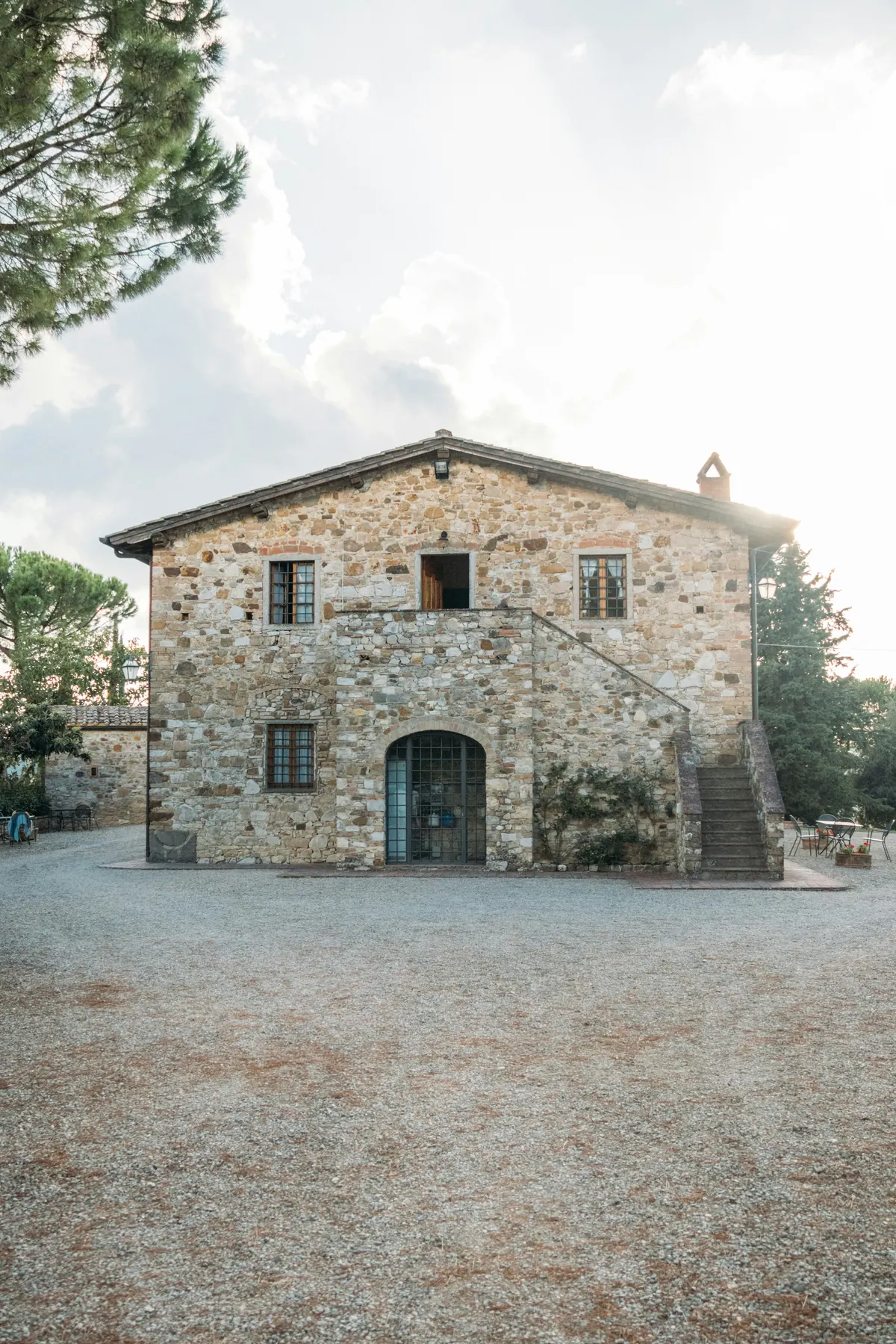
An illustrative scene, familiar to any developer. The last key is handed over, the owners' association is installed and the developer closes the receivables spreadsheet. The carefully designed club, the ground-floor arcade and the corner restaurant pass into other hands. Whatever income those spaces produce over the coming decades, if any, belongs to whoever stayed.
A crowded showroom proves demand. Only discounted cash flow proves permanence.
That exit is not an oversight; it is legal design. Since 2004, Brazil's Law 4,591/1964 has allowed a development to be ring-fenced as a segregated estate. Article 31-E extinguishes it once construction is registered and title passes to the buyers. The law treats development as an event with a beginning, a middle and an end. Anything meant to earn after that end needs a different architecture, decided before the first sketch.
The investor relations page of JHSF lists five shopping centers, eleven hotels, 34 restaurants and bars and 71 residential rental units in operation. What matters there is the logic, not the scale: the project stops being inventory to clear and becomes a cash-flow engine, with its own contracts, financing, tax profile and exit. The simulator alongside estimates gross recurring revenue and its twenty-year total; that number only opens the conversation.
Development was designed to end, so the perpetual asset must be born apart from it
The segregated estate exists to protect people who buy off plan. Article 31-A says it does not mix with the developer's other assets and answers only for the debts of that project. Its assets can secure only loans spent entirely on building and delivering the units. That makes it an excellent shield for buyers and a poor shell for a club, an arcade or a hotel meant to be held for decades.
Separation therefore starts at the registry. The development memorandum breaks down the total built area and the common areas. In our view, space registered as common belongs to the buyers collectively and cannot later be reclaimed for convenience. Anyone planning to retain space must decide, at the massing stage, which areas will be independent units held in the developer's own name, each with its own title. Without that decision on paper, permanence turns into a fight at the owners' meeting.
Retaining is a capital allocation decision, not a gesture of legacy
Every square meter retained never reaches the cash register through commercial curation; it becomes parked capital that could have bought the next site. The useful question is not how much the asset will bill over twenty years. It is what its future cash flow is worth today, compared with what the same space would fetch if disposed of. The first question produces soothing numbers. The second produces decisions.
The minimum yardstick is the opportunity cost of money. When we checked for this article, series 432 of the Central Bank of Brazil showed a Selic target of 13.75% a year. An investment tied to the Selic earns close to that with no vacancy, no defaults and no roof to replace. An operating asset carries those risks and management risk too. If its net return does not beat the Selic by a comfortable margin, retaining means paying dearly to take on risk.
An asset is perpetual when its discounted cash flow, not its cumulative revenue, exceeds what the same space would fetch if it were disposed of.

Accounting recognizes an income asset only when its use genuinely changes
Under Brazilian standard CPC 28, the local counterpart of IAS 40, investment property is real estate held to earn rentals, for capital appreciation or both. A unit built to be disposed of is inventory; the same unit, once leased to a third party, may change category. Paragraph 57 is blunt: a transfer requires an evidenced change in use, and a change in management's intentions alone is not enough.
The standard also treats a hotel run by its owner as owner-occupied property, because guest services are significant. A management contract with a third party can change that reading. How you operate changes how you measure. And how you measure changes what investors see on the balance sheet.
Long contracts are what turn floor area into a discountable flow
A well-designed amenity is worth nothing on paper until someone is obliged to pay for it. Article 54-A of Brazil's Tenancy Law governs the build-to-suit lease: the landlord acquires, builds or substantially refurbishes a property specified by the future tenant, for a fixed term. In that case, the freely agreed terms prevail.
In practice, three things change. The parties may waive rent review for the life of the contract. The penalty for early exit may reach the sum of the rents due until the end of the term. And a flow protected by a long contract with a creditworthy tenant is discounted at a lower rate than the same flow exposed to annual renewals. That is why ceiling height, electrical load, loading docks and floor-plate flexibility are financial decisions: they determine who can occupy the space on renewal day.
The retained asset is financed with collateral unlike that of construction
Retaining does not mean locking up equity forever. Law 9,514/1997 governs the fiduciary transfer of real estate, in which the borrower transfers resolvable ownership to the lender as security. Individuals and companies may use it; it is not reserved to real estate finance institutions.
Receivables can become funding too. Brazil's 2022 securitization framework defines Receivables Certificates as securities issued only by securitization companies, backed by credit rights identified in advance and subject to eligibility criteria. The contract becomes backing, and the backing returns part of the locked-up capital. The condition is strict: auditable contracts, clean title and reliable information, because a long-term lender wants to know what has been verified and what is merely assumed.
Disposing of and leasing property will be taxed on different footings
Supplementary Law 214/2025, which creates Brazil's new IBS and CBS consumption taxes, sets up a specific regime for real estate transactions. Rates on those transactions are cut by 50%; for leases, paid assignments and rental arrangements, the cut is 70%. In a development, tax on unit disposals falls due with each payment. From 2027, each property owned by a regular-regime taxpayer carries an adjustment reducer, indexed to the IPCA inflation index, that lowers the tax base only when the property is disposed of.
Whoever retains space will live with two tax profiles in the same project: one for the commercial curation of units, assessed on each receipt, and one for recurring income, monthly and for decades. The reducer travels with the retained property and matters on the day it is disposed of. That map belongs in the model before the retention decision, not after.
The exit door must exist before it is needed
Perpetual for the asset does not mean illiquid for investors. The classic route for mature assets is the real estate investment fund. Law 8,668/1993 sets it up as a closed-end condominium with no redemption of units and requires it to distribute at least 95% of profits measured on a cash basis, every six months. The operating rules sit in the annex devoted to these funds in CVM Resolution 175.
A vehicle that pays out nearly all its cash profit needs a maintenance reserve and a reinvestment plan designed in advance, because the building ages while the cash goes out. An asset that may one day fit a regulated vehicle should be born with compatible accounts, contracts and reporting, even if that exit is never exercised. Preparing the door costs little at the start and a lot at the end.
Worked example: the simulator's total and the present value that decides
The figures below are InnovaSphere assumptions, not market data. The project has a GDV of R$ 200 million, the simulator's default, and gross recurring revenue of 4% of GDV. The developer is weighing whether to retain commercial and service areas worth R$ 36 million on disposal. In scenario A the flow is flat; in scenario B it rises 4% a year. Terminal value in year 20 is the year-21 flow divided by 9%. Figures are rounded.
| Item | Scenario A: flat flow | Scenario B: escalating flow |
|---|---|---|
| Assumption: gross annual revenue (4% of GDV) | R$ 8.0 million | R$ 8.0 million in year 1 |
| Assumption: costs, taxes and maintenance reserve | 55% of revenue | 55% of revenue |
| Net annual flow | R$ 3.6 million | R$ 3.6 million in year 1 |
| Assumption: annual escalation | 0% | 4% |
| Assumption: annual discount rate | 14% | 14% |
| Assumption: terminal capitalization rate | 9% | 9% |
| Gross 20-year total (A is what the simulator shows) | R$ 160.0 million | R$ 238.2 million |
| Net 20-year total | R$ 72.0 million | R$ 107.2 million |
| Present value of the 20-year flow | R$ 23.8 million | R$ 30.3 million |
| Present value of the year-20 terminal value | R$ 2.9 million | R$ 6.4 million |
| Total present value of retaining | R$ 26.8 million | R$ 36.6 million |
| Assumption: disposal value of the areas | R$ 36.0 million | R$ 36.0 million |
| Difference in favor of retaining | minus R$ 9.2 million | plus R$ 0.6 million |
| Stress: total present value at 16% | R$ 23.4 million | R$ 31.1 million |
| Stress: total present value, revenue 10% lower, costs unchanged | R$ 20.8 million | R$ 28.5 million |
The reading is less obvious than the simulator suggests. A gross twenty-year total of R$ 160 million equals 0.8 times GDV and looks impressive. After costs, the nominal net falls to R$ 72 million or R$ 107 million, and present value lands close to the disposal price. In scenario A, retaining destroys value. In scenario B, it breaks even.
The stress test shows how thin that tie is. A 14% rate barely clears the Selic; at 16%, more consistent with the risk of an operating asset, scenario B falls R$ 4.9 million short. Revenue 10% lower, with costs unchanged in reais, opens a R$ 7.5 million gap.
By our calculations, scenario B breaks even only with annual escalation of at least 3.8% or a discount rate no higher than 14.2%. What settles the question is not the project's ambition but the contracts, the agreed escalation, the cost of financing and cost discipline.
When it does not pay off to retain the asset
First, when the developer's cost of capital exceeds the asset's net return. If the next project depends on cash from commercial curation, locking up the space delays an operation that would earn more.
Second, when scale cannot support a quality operation. A club or an arcade too small to pay for staff, maintenance and replacement tends to live on subsidy. And a recurring subsidy is not an asset: it is a liability under another name.
Third, when there is no contract and no proven occupant. Without an instrument that obliges someone to pay, the flow is an expectation. And expectations can be neither financed nor discounted with confidence.
Checklist for deciding to retain
- Define the retained areas at the massing stage and confirm with counsel that the memorandum registers them as independent units.
- Calculate with your controllers the present value of the net flow, at a rate above the Selic, and compare it with the disposal value.
- Confirm the asset's classification under CPC 28 with your accountant and auditor, taking into account who will operate it.
- Structure contracts whose term, escalation and penalty match the investment, checking with counsel whether a build-to-suit lease applies.
- Map with your tax adviser the IBS and CBS on recurring income and on a future disposal, including the adjustment reducer.
- Test financeability with lenders or securitization companies, checking title, available collateral and occupants' credit.
- Design the maintenance reserve and the exit door with the asset manager.
Two group companies work on parts of this list. InnConta handles tax, credit and fixed assets outside a company's core, from a regularized title deed to an asset that can serve as collateral. Valida Auditoria performs independent audits that separate the verified from the assumed. The decision to retain still belongs to the developer.
Frequently asked questions about the perpetual asset
Is retaining space compatible with the segregated estate?
Yes, provided the retained areas are broken down in the memorandum. The segregated estate protects delivery and ends with it; the income asset needs its own ownership and governance.
Is the simulator's twenty-year total the value of the asset?
No. It is the nominal sum of gross revenue. In the example, the flat scenario's R$ 160 million gross is worth R$ 26.8 million in present value; in the escalating scenario, R$ 238 million gross is worth R$ 36.6 million.
Is a hotel retained by the developer investment property?
It depends on who operates it. Under CPC 28, a hotel run by its owner is owner-occupied property; a management contract with a third party may lead to a different reading.
Why does tax reform matter to those who retain?
Because it cuts IBS and CBS rates by 70% on leases and by 50% on other real estate transactions, and attaches to each property a reducer that weighs on a future disposal.
Is a real estate fund the mandatory exit?
No. It is a regulated exit, with a minimum payout of 95% of cash profit. Direct disposal, refinancing backed by a fiduciary transfer and securitization of receivables are alternatives.
Legal basis
- Law 4,591/1964: segregated estate (arts. 31-A to 31-E) and memorandum (art. 32).
- Law 8,245/1991: build-to-suit lease (art. 54-A, §§ 1 and 2).
- Law 9,514/1997: fiduciary transfer of real estate (art. 22).
- Law 14,430/2022: Receivables Certificates (art. 20).
- Supplementary Law 214/2025: real estate under IBS and CBS (arts. 251, 257, 261 and 262).
- Law 8,668/1993: real estate investment funds (arts. 1, 2 and 10, sole paragraph).
- CVM Resolution 175: real estate investment funds (Regulatory Annex III).
References (12)
- Law 4,591/1964 (real estate development; segregated estate and memorandum)
- Law 8,245/1991 (tenancy)
- Law 9,514/1997 (fiduciary transfer of real estate)
- Law 14,430/2022 (securitization and Receivables Certificates)
- Supplementary Law 214/2025 (IBS and CBS; real estate transactions)
- Law 8,668/1993 (real estate investment funds)
- CVM Resolution 175 (investment funds; Regulatory Annex III)
- CPC 28 (Investment Property)
- Central Bank of Brazil, SGS series 432 (Selic target)
- JHSF, investor relations, frequently asked questions
- InnConta
- Valida Auditoria